
Festival Operations Management: How #DIESE Supports the Festival d’Aix-en-Provence
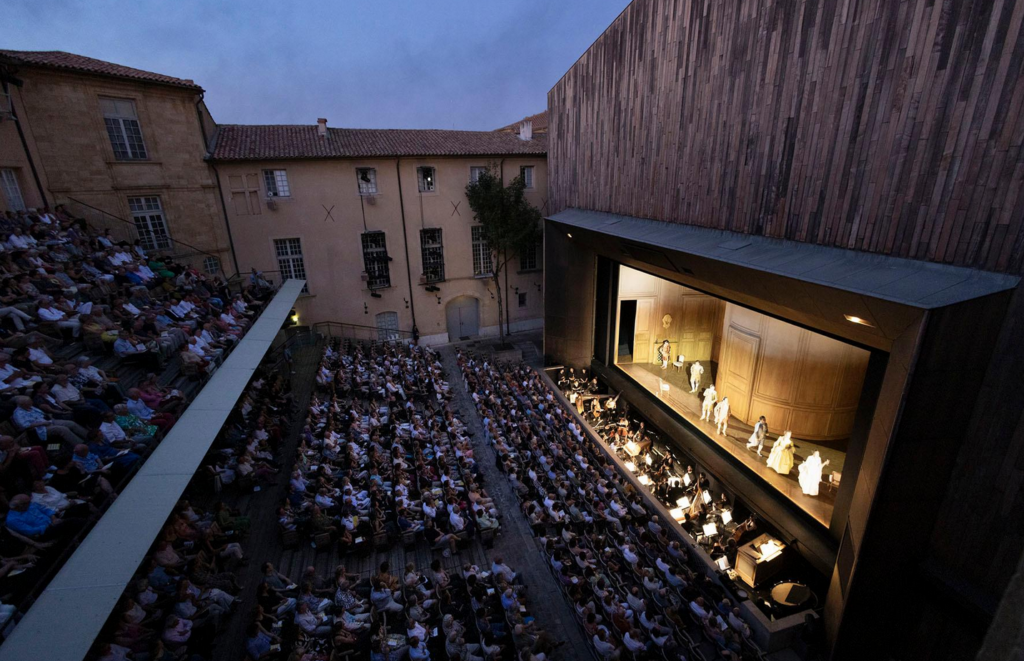
Each summer, the Festival d’Aix-en-Provence experiences an intense surge in activity. With hundreds of artistic and technical contracts to manage in a short period, the festival relies on robust and proven tools. For nearly ten years, #DIESE has supported the festival in production management, resource planning, and operational oversight.
A festival with unique organizational challenges
The Festival d’Aix-en-Provence holds a unique place in the European cultural landscape. Historically focused on opera, it also offers concerts, contemporary works, and year-round educational programs.
Its activity peaks during the summer festival in June and July, which concentrates the bulk of opera productions. Other key periods include the “Aix en juin” programming and the Academy, hosting young artists in residence. Additionally, numerous co-productions and tours, both in France and abroad, add complexity.
The festival has no permanent orchestra. Each season requires recruiting musicians, soloists, technicians, and administrative staff. The volume of contracts is high, with strict legal frameworks, particularly regarding artistic rights.
Before #DIESE: managing peak workloads
The main organizational challenge is the extreme variation in activity. During the off-season, around fifty permanent staff operate across Aix-en-Provence, Paris, and Venelles, where the workshop is located.
As summer approaches, the number of contracts rises to 500–600 within a short period. Coordinating production, administration, HR, workshops, and technical teams demands an efficient system. The festival needed a tool to centralize information, secure processes, and give all teams a shared view.
#DIESE in festival production management
Deployed in 2015, #DIESE now covers a wide range of activities at the Festival d’Aix-en-Provence. The system supports:
- Production management and overall scheduling
- Contact and contract management for artists and staff
- Personnel management via the Time and Activity module
- Inventory management of costumes, wigs, props, and sets
- Budget tracking and analytics
Touring productions are identified separately in #DIESE, ensuring clarity between local and external activities.
Integration with the festival’s digital ecosystem
#DIESE is fully integrated into the festival’s digital tools. Key interfaces include:
- Payroll software sPAIEctacle by GHS, covering contacts, contracts, and payroll for permanent and temporary staff
- DocuSign for electronic signatures of employment contracts, rights agreements, service contracts, and housing agreements
- Sage accounting software, transmitting all financial commitments
These integrations ensure reliable data flow, limit re-entry, and support high-volume contract management.
Team autonomy and knowledge sharing
The festival stands out for its high level of adoption of #DIESE. Internal process documentation and peer-to-peer training allow teams to operate autonomously.
#DIESE has become a common language between departments. It carries processes, supports handovers, and ensures continuity. The festival uses the system extensively, with minimal reliance on ad hoc development.
Continuous evolution
Even after nearly a decade, the festival continues to expand its use of #DIESE. Recently, the system has been applied to artist housing. Apartments and houses are now assigned within #DIESE. Rental documents are generated in the system and signed electronically via DocuSign.
This evolution shows #DIESE’s ability to adapt to new operational needs while remaining integrated with existing processes.
Key takeaways
- A complex cultural organization with high seasonal peaks
- Extensive, structured use of #DIESE since 2015
- Strong team adoption and knowledge sharing
- Reliable, transparent processes across departments
- A system that evolves with operational needs
Managing complex festival productions or peak activity periods?
Discover how #DIESE can support your festival production management and improve coordination across teams.