
Space planning: how the CND centralizes booking requests with #DIESE
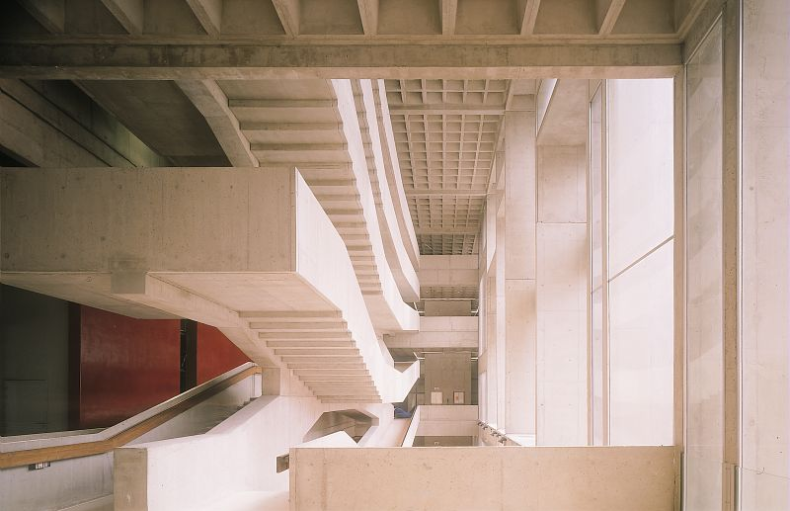
To manage the occupancy of its many spaces and coordinate activities across multiple sites, the French National Dance Centre (Centre national de la danse – CND) chose #DIESE. The result: a more centralised, transparent and collaborative approach to booking management for both teams and visiting artists.
A hybrid venue with multiple uses
The Centre national de la danse (CND) occupies a unique position within the French cultural landscape. Neither a school nor simply a performance venue, it combines several missions: artist residencies, training programmes, masterclasses, research activities and space allocation.
In Pantin, nearly 12,000 square metres of modular spaces are continuously used by artists, companies and partner organisations. The institution also operates a second site in Lyon, with its own organisational specificities.
This diversity is also what makes operations complex: there are many spaces, many different uses, and booking requests coming from multiple internal stakeholders.
A key challenge: structuring space planning
Before the project, the CND faced a common challenge for hybrid cultural organizations: centralising and securing the management of space bookings.
Several key needs emerged:
- Consolidating requests coming from different departments
- Obtaining a global view of activities across Pantin, Lyon and off-site operations
- Clearly identifying project owners
- Improving internal communication regarding space occupancy
This need became even more critical in a specific context: major renovation works impacting part of the venue and requiring some activities to be relocated to partner institutions.
A focused and fast implementation with #DIESE
The project was delivered within a tight schedule, leading to a successful go-live at the beginning of the year.
The scope was deliberately focused on space planning and booking management.
Today, #DIESE enables the CND to:
- Centralise all booking requests within a single platform
- Structure occupancy management through planning statuses and department in charge
- Manage different organisational rules between their two premises, Paris and Lyon
- Configure user access rights according to responsibilities
All of this was achieved without custom development, using #DIESE’s standard planning features.
An internal mini-site to improve information sharing
One of the project’s key features is the implementation of an internal consultation mini-site, used as a central information hub for teams.
This “pivot document” allows users to:
- View room occupancy over 1-day or 7-day periods
- Access Pantin and Lyon schedules
- Identify project owners
- Search for available spaces
- Access the internal directory
The result is information that is centralised, accessible and always up to date, without relying on scattered spreadsheets or informal exchanges.
Looking to improve the management of your spaces and activities?
Let’s discuss your operational challenges and explore how #DIESE can adapt to your organisation.