
The nomadic theatre bringing scheduling, contracts and payroll together
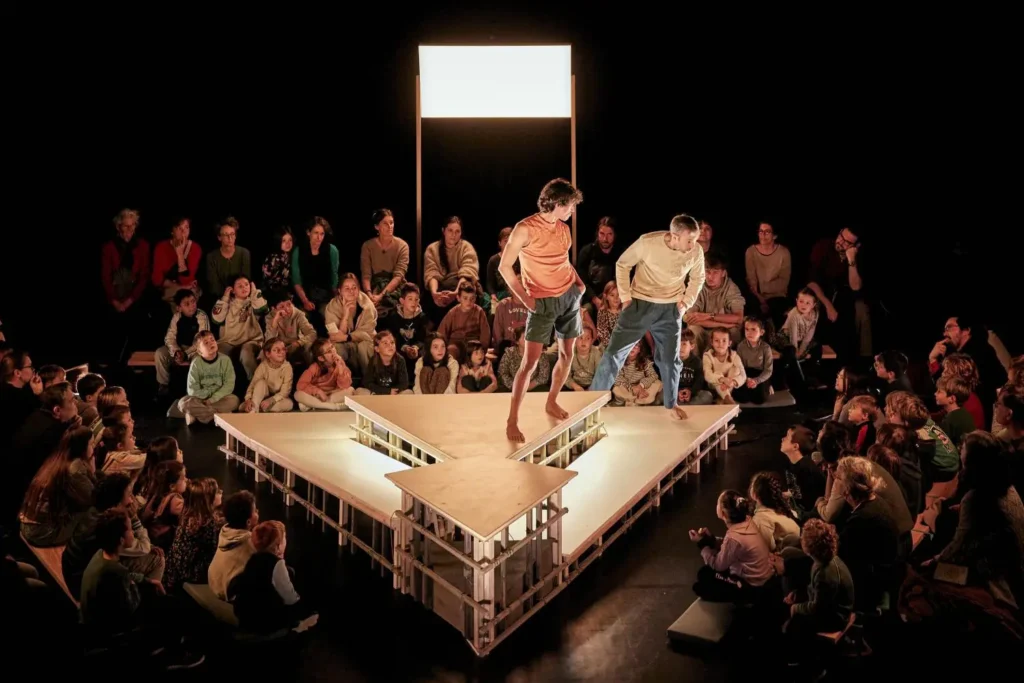
Since 1959, Tréteaux de France has been taking theatre to audiences wherever they are. With no permanent performance venue and nearly 500 touring dates a year, this touring national drama centre (Centre dramatique national, or CDN) coordinates a small permanent team alongside more than 150 freelance artists and technicians. With #DIESE, it now brings its full schedule, contracts and working time together in a single tool, right through to the payroll export.
Treading the trestle boards since 1959
The name is no accident. Tréteaux are trestles: the light wooden platform, put up and taken down at every stop, on which travelling players performed from the Middle Ages through to Molière’s day. In French, courir les tréteaux – literally “running the trestles” – came to mean the life of a touring actor. By giving his company this name in 1959, the actor and director Jean Danet was stating an ambition: to meet audiences where they are.
In 1971, the company received the Centre dramatique national label, awarded by the French Ministry of Culture to publicly funded drama companies with a national remit. Based in Aubervilliers, just north of Paris, and now led by Olivier Letellier, Tréteaux de France carries this tradition forward. Its programme is predominantly theatre, with a strong focus on storytelling theatre (théâtre de récit), which lends itself to lightweight sets designed to be put up anywhere.
France’s only touring national drama centre
Each season, Tréteaux de France presents up to five new productions, alongside co-productions and touring across France and abroad. It also hosts companies in its three residency spaces and runs an extensive learning and participation programme. In summer, a dedicated team runs the big-top festival L’Île-de-France fête le Théâtre (“Île-de-France celebrates theatre”), an initiative of the regional authority for Paris and its surrounding area.
For a touring national drama centre, the challenge is both simple and ambitious: coordinating every project on the move, teams and vehicles included.
The company’s administration first sought to bring all scheduling information together in one place, across touring, technical scheduling, the festival and learning activities. The second aim was to go further: linking the schedule to contracts and payroll, and sharing it easily with freelance staff.
One last feature shaped the company’s choice. Technicians and artists are scheduled across departments, often by the same people, so bringing everything into a single tool was the natural step.
A seamless process, from scheduling to payroll
Tréteaux de France chose the Projects, Planning, Contacts and Time and Activity Management modules of #DIESE, together with the Contracts module and the payroll interface.
- A general schedule that is clear at a glance. In #DIESE, the team found a general schedule giving a clear view of each project, which can be exported easily. All of the company’s activities are now managed there, along with space bookings and even vehicles.
- Complete time management. Permanent and freelance staff, technical and artistic alike, are all tracked in the time management module, then exported to payroll (sPAIEctacle, a French payroll software for the performing arts).
- Contracts that reflect artistic practice. In France, artists are typically paid a fee per performance (cachet). This fee can vary from one production to another, or between the first performance and the following ones. These terms are held centrally in #DIESE and feed straight into contracts.
- Direct access for everyone. Permanent and freelance staff check their schedules on MyDiese, and contracts are signed electronically via DocuSign.
What changes day to day
First, every piece of information is entered only once. A scheduled date feeds into working time, which in turn feeds contracts and the payroll export. Teams gain consistency from one department to the next.
Next, the touring schedule becomes a shared tool. Every freelancer knows where and when they are expected, with no files being passed around. Schedulers, for their part, coordinate technicians and artists in a single space.
Finally, the flexibility of the Contracts module suits the realities of a company on the move, right through to the summer festival contracts. The time management team also took to the tool quickly and fully.
At IT4Culture, we are proud to have supported an organisation with such a distinctive format and such demanding operations: light to move, solid at its core.
Do you coordinate tours or large freelance teams? The IT4Culture team would be delighted to discuss your needs with you.